Supporting AI Compliance for the EU Market
Your trusted Authorised Representative under Article 22 & Article 54 of the EU AI Act, supporting seamless regulatory compliance for your AI systems across Europe.
Get Started
Your trusted Authorised Representative under Article 22 & Article 54 of the EU AI Act, supporting seamless regulatory compliance for your AI systems across Europe.
Get Started
Trustora Digital serves as your dedicated Authorised Representative under Article 22 & Article 54 of the EU Artificial Intelligence Act, bridging the gap between innovation and compliance.
Our mission is to serve as a reliable point of contact with competent authorities and supporting your AI systems compliance with applicable regulatory obligations throughout their lifecycle.
With deep expertise in AI governance, risk management, and regulatory frameworks, we ease the entrance of your AI systems on the Market while you focus on what you do best.
As your Authorised Representative, we act as your designated point of contact with EU authorities, manage documentation requirements, facilitate market surveillance cooperation, and operate continuous regulatory compliance for your AI systems where the outputs are used within the European Union.
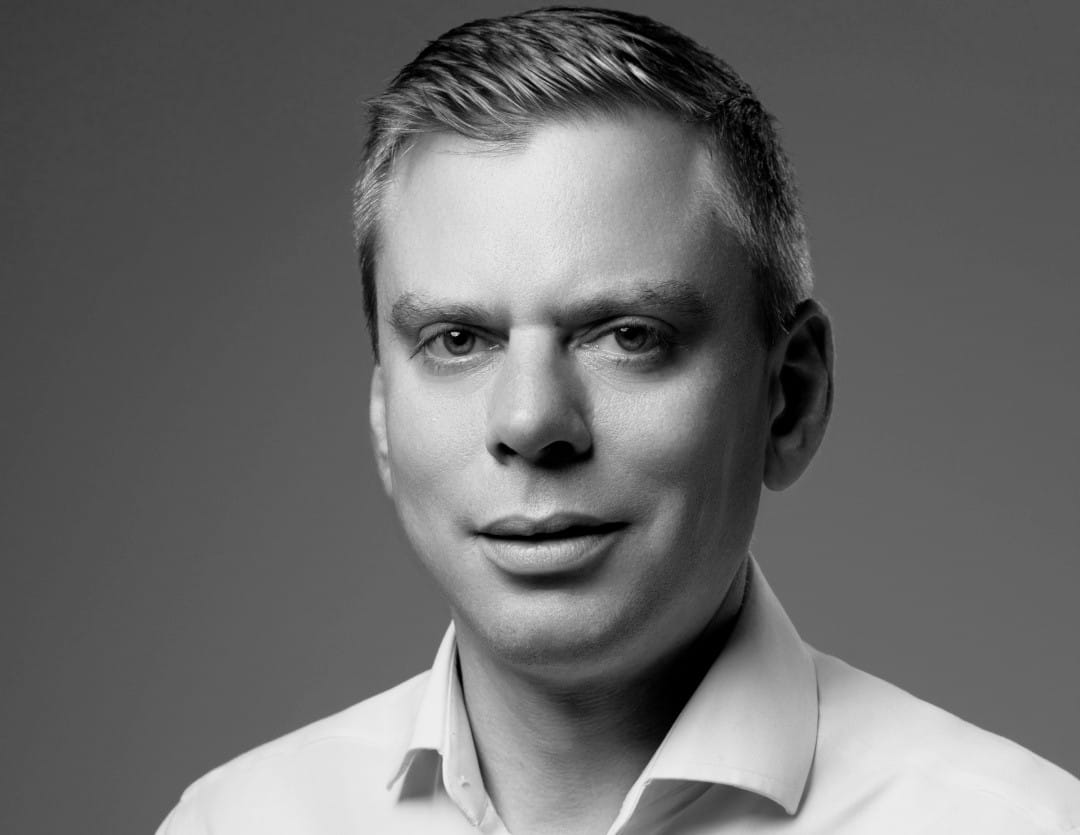
Chief Executive Officer
Adam Leon Smith is an AI regulatory and technical expert specialising in EU AI Act compliance and risk management for complex AI systems. He is also Chair of the AIQI Consortium, a global initiative to promote the use of the quality infrastructure for responsible AI, and Deputy Chair of the UK’s national AI standards committee. He has led many AI standardisation projects in ISO/IEC SC 42 and CEN-CENELEC JTC 21 supporting the AI Act and the generally acknowledged state of the art, including the Article 17 Quality Management System.
Before his involvement in AI regulation, Adam spent 20 years in senior technology roles, delivering verification and validation solutions for highly complex or high-risk industry challenges. In 2024, the University of Bath awarded Adam an honorary doctorate in recognition of his work and its impact on the profession.
As CEO of Trustora Digital, Adam supports non‑EU providers in meeting their obligations under Articles 22 and 54 of the EU AI Act, with a focus on practical documentation, assurance, and interaction with EU regulators.

Chief Strategy Officer
Dr. Tom Lebrun holds senior leadership roles in artificial intelligence governance and international standardization. At the Standards Council of Canada, he leads the national artificial intelligence and data governance standardization strategy. He also chaired certification and management system committees related to ISO IEC 42001 on Artificial Intelligence Management Systems. Through this work, he supports the translation of regulatory objectives into operational and interoperable governance frameworks.
In parallel, he provides sustained academic leadership in AI law and governance. He has taught for more than six years at the graduate and doctoral levels at Université Laval and Université Paris Saclay. He has also delivered executive and public policy training for institutions including the Government of Canada, Global Affairs Canada, and the MILA Quebec Artificial Intelligence Institute.
At Trustora Digital, Tom serves as Chief Strategy Officer. In this role, he leads strategic positioning, regulatory alignment, and the development of governance frameworks.

Chief Operations Officer
Dr. Martin Lestra is a researcher and an expert in EU affairs and project management. Over the past 12 years, he has designed and led several international research projects at the intersection between data and public policy in the public and private sector, including the EU's 2nd European Narrative Observatory on Disinformation. He has worked as analyst and coordinator in multistakeholder negotiations at the OECD; and built and implemented the European strategy of several SMEs.
He has lectured and provided expert contributions at the European Commission, the College of Europe, Sciences Po St Germain-en-Laye, Sciences Po Grenoble, as well as the Universities of Lyon and Toulouse.
At Trustora Digital, Martin serves as Chief Operations Officer.

Chief Technology Officer
Dr. Clément Bénesse is a researcher specializing in trustworthy artificial intelligence, with a focus on explainability, algorithmic fairness, privacy and the societal impacts of AI systems. His work explores the use of AI as a tool for public interest objectives, including disinformation detection and the alignment of large language models with social values. His technical expertise spans a broad range of methods and tools, from classical statistics and machine learning to state-of-the-art generative AI systems, enabling him to bridge foundational approaches with emerging AI capabilities.
Beyond his technical research, he has led interdisciplinary work at the intersection of computer science and law, contributing to research and policy-oriented initiatives related to the European Union’s artificial intelligence regulatory framework. In this context, he has participated as an expert within AFNOR, supporting the standardization of AI regulation and the development of technical frameworks aligned with legal and regulatory requirements.
At Trustora Digital, Clément acts as Chief Technology Officer, where he defines and oversees the organization’s technical strategy.
We act as your official representative in the European Union, serving as the primary point of contact for competent authorities, market surveillance authorities and notified bodies, while supporting regulatory interactions throughout the lifecycle of your AI system as required by the AI Act (Article 22, Article 54).
We help organisations structure, review and maintain the technical documentation required under the AI Act (Article 11 – Annex IV), including technical files, declarations, records and supporting evidence, ensuring that documentation remains organised, accessible and up to date throughout the AI system lifecycle.
We support the design of governance frameworks, quality management systems, post-market monitoring and organisational processes aligned with AI Act requirements (Article 17), including obligations applicable to general-purpose AI models.
We provide practical recommendations to strengthen risk management (Article 9), testing for Article 9-15, testing in real-world conditions (Article 60), validation, transparency (Article 13), human oversight (Article 14) and accuracy, robustness and cybersecurity of AI systems (Article 15).
We help organisations establish logging, incident management and lifecycle monitoring processes that support accountability and continuous compliance (Articles 12, 72 and 73).
Ready to enter EU market? We're here to help.
50 Avenue des Champs-Élysées, Paris 75008, France